
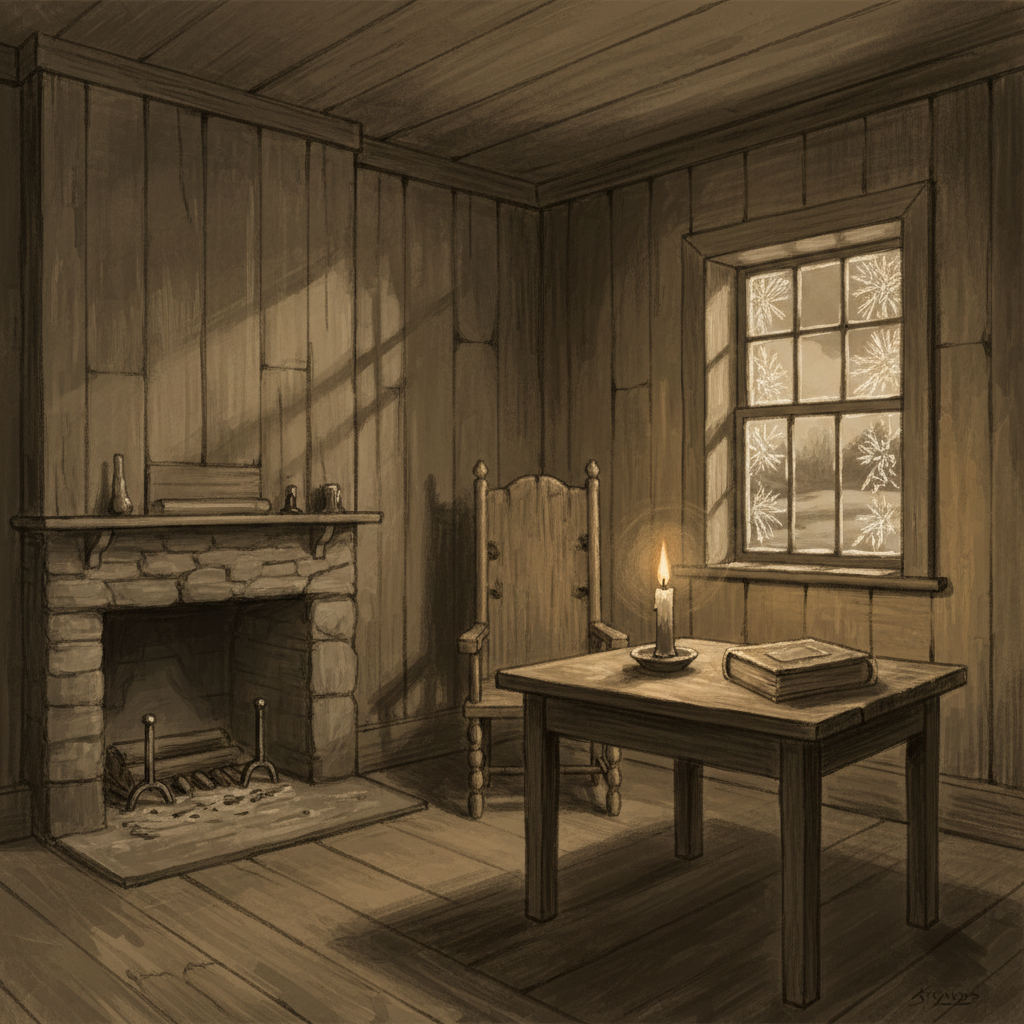
The Salem Witch Trials did not begin with a dramatic accusation or a public confrontation. They began quietly, in the winter of 1691–1692, in the household of the Reverend Samuel Parris, with two girls exhibiting behaviors that their community found deeply alarming.
Betty Parris was nine years old. Abigail Williams, her cousin and the minister's niece, was approximately eleven. In January 1692, they began having what witnesses described as fits — convulsions, strange postures, incoherent speech, claims of being pinched and bitten by invisible forces.
The Puritan community had a ready framework for understanding what was happening: the girls were being tormented by witches. The question was not whether witchcraft was occurring — that was assumed. The question was who was responsible.
Voices of Salem Village
Parris consulted with other ministers and eventually with a doctor, who could find no physical cause for the girls' symptoms and suggested the cause might be supernatural. This diagnosis — or rather, this failure to find a natural diagnosis — helped set events in motion.
Under pressure to identify their tormentors, the girls named three women: Tituba, the enslaved woman in the Parris household; Sarah Good, a homeless beggar; and Sarah Osborne, an elderly woman who had stopped attending church. These were marginal figures — people with little social standing who were easy targets for suspicion.
The arrests of Tituba, Good, and Osborne in late February 1692 did not end the crisis. They accelerated it. Tituba's dramatic confession — in which she described meeting the devil, signing his book, and flying on sticks — confirmed the community's worst fears and opened the door to an expanding circle of accusations that would eventually engulf more than 200 people.