
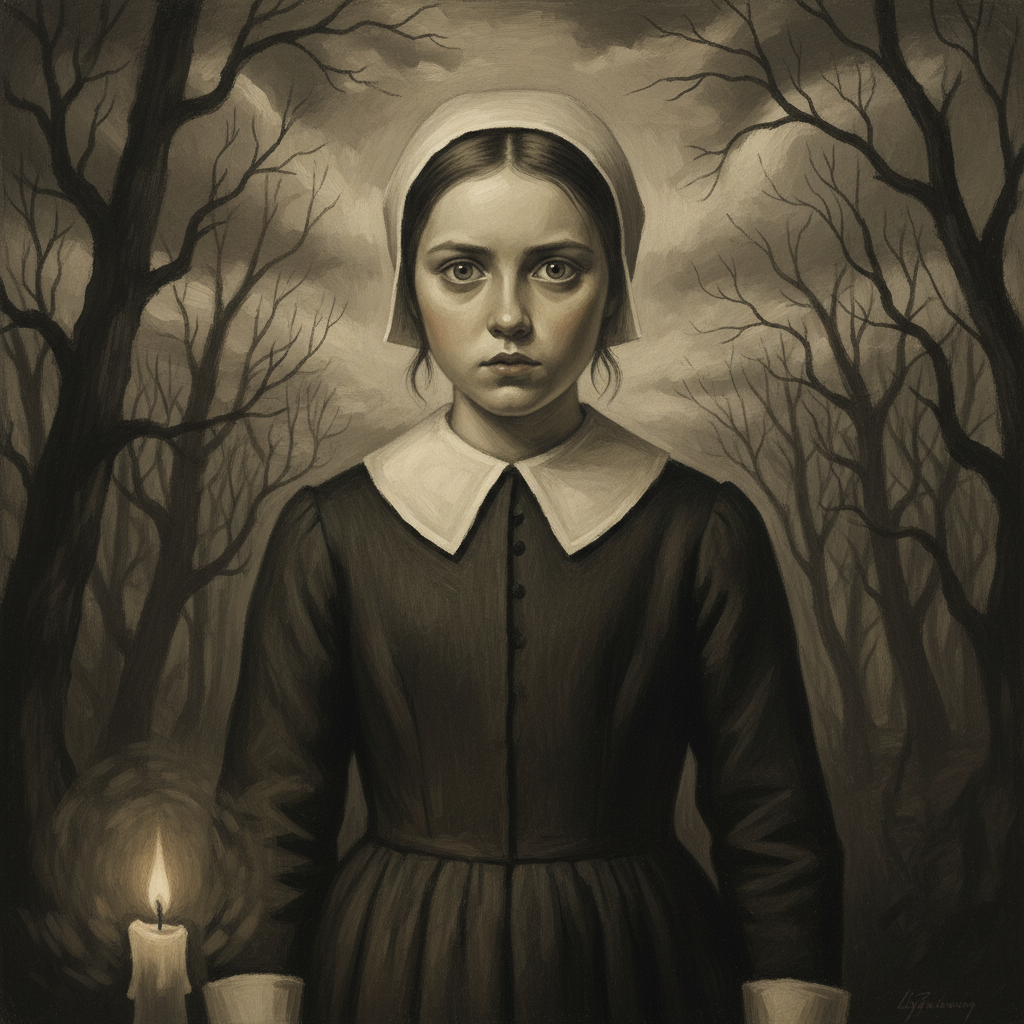
Of all the figures connected to the Salem Witch Trials, Abigail Williams is perhaps the most haunting. She was a child — approximately eleven years old in 1692 — living in the household of her uncle, the Reverend Samuel Parris. And she became one of the central accusers whose testimony helped fuel a crisis that claimed nineteen lives.
We know relatively little about Abigail's life before the trials. She was apparently an orphan, taken in by her uncle after the death of her parents. Living in the minister's household meant living at the center of Salem Village's religious and social life — a position that gave her both visibility and vulnerability.
What motivated Abigail Williams? Historians have offered many explanations: genuine belief in witchcraft, social pressure, a desire for attention, psychological disturbance, or simply the terrifying momentum of events that had grown beyond anyone's control.
Voices of Salem Village
In January and February 1692, Abigail and her cousin Betty Parris began exhibiting strange behaviors — convulsions, strange vocalizations, claims of being pinched and bitten by invisible forces. When pressed to identify who was tormenting them, they named Tituba, Sarah Good, and Sarah Osborne.
As the crisis escalated, Abigail's accusations expanded. She named more and more people as witches, including some of the most respected members of the community. Her testimony in court was dramatic and compelling — she claimed to see the specters of the accused tormenting her in the courtroom itself.
And then, after the trials ended, Abigail Williams largely disappears from the historical record. Unlike Ann Putnam Jr., who publicly apologized for her role in 1706, there is no record of Abigail acknowledging what she had done. We do not know where she went, whether she married, whether she had children, or when she died. One of the most recognizable names in American history simply vanishes — leaving behind only questions.