
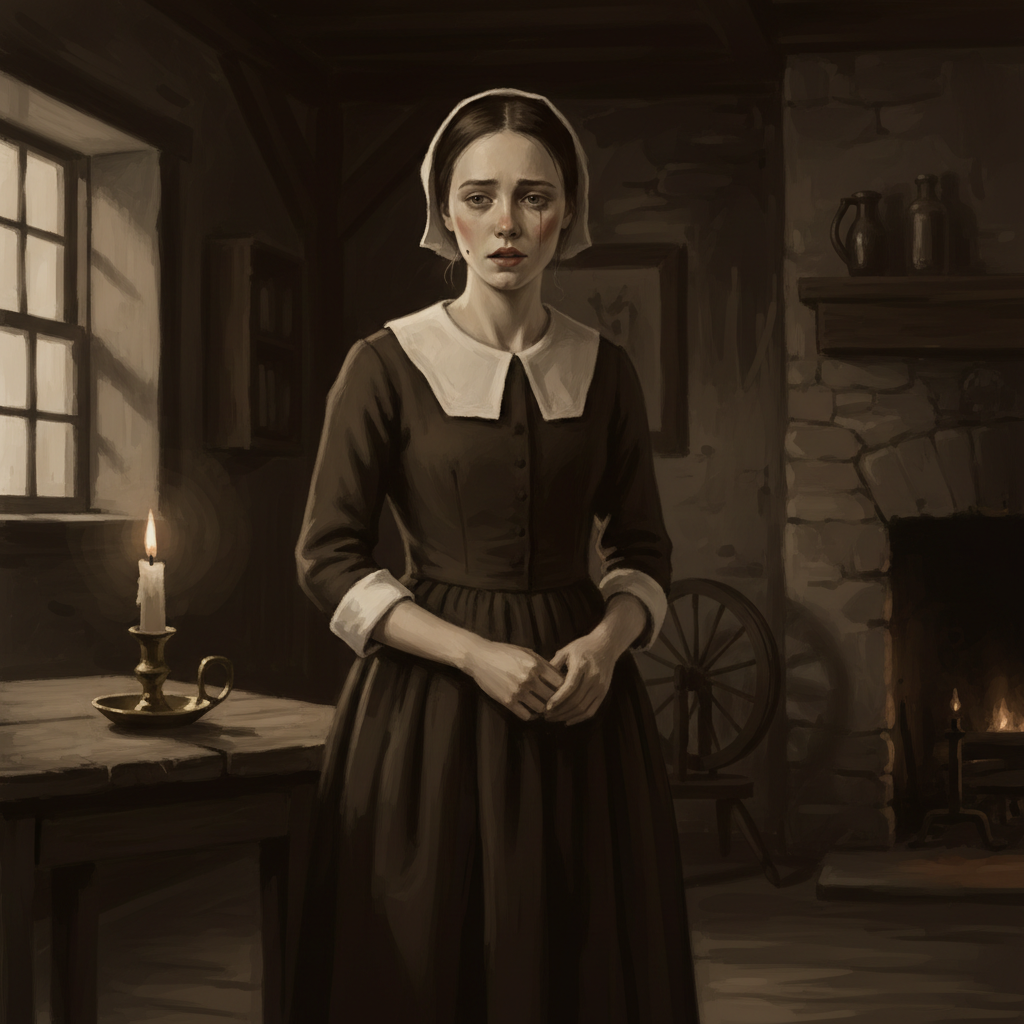
Among the young accusers of the Salem Witch Trials, Ann Putnam Jr. stands out for two reasons. First, she was one of the most active and influential accusers, whose testimony contributed to the deaths of several people. Second, she was the only one of the original accusers who ever publicly acknowledged her role and asked for forgiveness.
Ann was twelve years old in 1692. She came from one of the most prominent families in Salem Village — her father, Thomas Putnam, was a leading figure in the community, and her mother, Ann Putnam Sr., was herself one of the accusers. The Putnam family had longstanding grievances against several of the people who were accused, which has led historians to examine the family's role in the crisis with particular scrutiny.
Ann's 1706 apology is one of the most remarkable documents to survive from the Salem era. She described herself as 'a poor vile creature' who had been 'deluded by Satan' and asked forgiveness from those she had wronged.
Voices of Salem Village
Ann's accusations were extensive. She testified against dozens of people, including some of the most respected members of the community. Her testimony against Rebecca Nurse — a seventy-one-year-old grandmother who was initially acquitted by the jury — was particularly consequential. After the judges sent the jury back to reconsider, Nurse was convicted and hanged.
After the trials, Ann's life was marked by loss. Both of her parents died within a few years of the trials, leaving her to care for her younger siblings. She never married. She lived out her life in Salem Village, surrounded by the families of people whose deaths she had contributed to.
In 1706, when Ann sought to become a full member of the Salem Village church, she was required to make a public statement. The statement she made went far beyond what was required. She acknowledged her role in the deaths of innocent people, expressed genuine remorse, and asked for forgiveness. It was an extraordinary act of moral courage — and it remains the only public apology any of the original accusers ever made.