
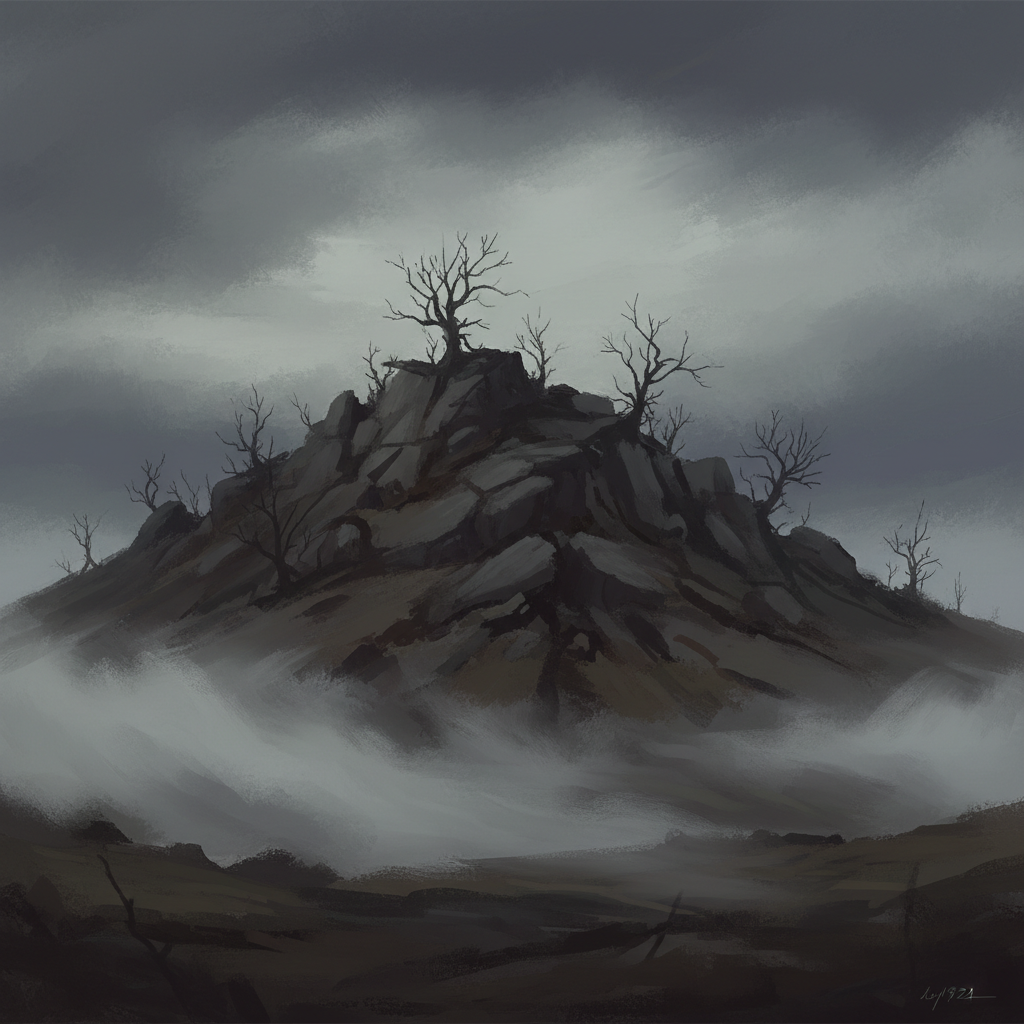
Between June and September 1692, nineteen people were hanged on a rocky outcropping near Salem that became known as Gallows Hill. They were convicted of witchcraft by the Court of Oyer and Terminer — a special court established specifically to handle the growing number of witchcraft cases.
The executions were public events. Crowds gathered to watch. Ministers attended. The condemned were given opportunities to confess, and some used their final moments to proclaim their innocence — statements that, for some observers, planted seeds of doubt about the proceedings.
The bodies of the executed were not given proper burials. They were left on the hill or buried in shallow graves nearby. Families sometimes retrieved the bodies of their loved ones under cover of darkness for private burial.
Voices of Salem Village
For centuries, the exact location of the executions was uncertain. The hill had been developed over the years, and the precise spot where the gallows stood was lost to history. This uncertainty added a particular poignancy to the story — the people of Salem had been so eager to forget what happened that they had allowed the very location of the executions to be forgotten.
In 2016, a research team led by historian Marilynne Roach and others identified what they believe to be the actual execution site — a rocky ledge on Proctor's Ledge, adjacent to what is now a Walgreens parking lot. The identification was based on historical documents, maps, and physical evidence.
In 2017, the city of Salem dedicated a memorial at Proctor's Ledge to the nineteen people executed there. The memorial lists their names and the dates of their executions. It is a quiet, sobering place — a reminder that behind the historical drama of the Salem Witch Trials were real people who died for crimes they did not commit.